 English

Book
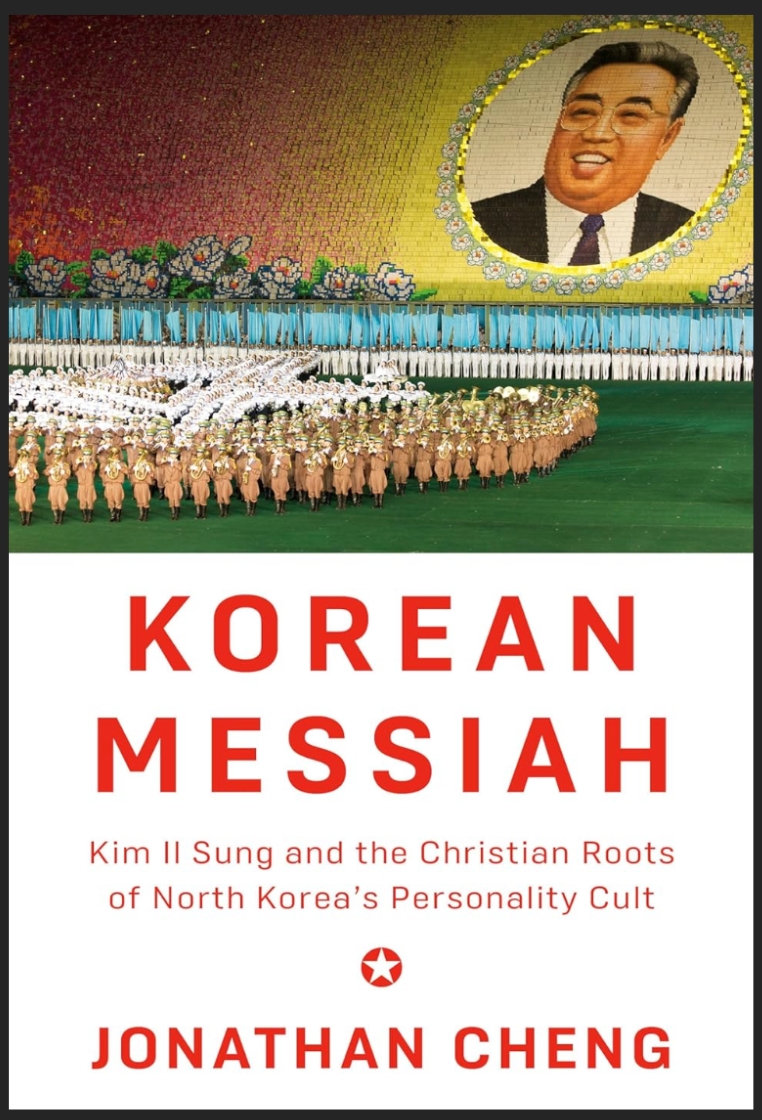
Buy the book
Korean Messiah: Kim Il Sung and the Christian Roots of North Korea’s Personality Cult (Alfred A. Knopf), April 14, 2026
A Foreign Policy Most Anticipated Book of 2026
“How do personality cults take hold? What happens when leaders mix politics and faith to demand immense sacrifices? Jonathan Cheng’s magnificent tale poses questions about the world far beyond North Korea. This utterly eye-opening history deciphers a defining pattern of global politics in the 21st century.”
—Evan Osnos, New Yorker staff writer, National Book Award-winning author of Age of Ambition: Chasing Fortune, Truth, and Faith in the New China
A landmark history of North Korea, told through the rise of the Kim dynasty and its surprising ties to American Christianity—a spectacular, penetrating account of the Hermit Kingdom
Jonathan Cheng, The Wall Street Journal’s China bureau chief and former Korea bureau chief, takes us deep inside Pyongyang, a city once so dominated by Christianity that it was known as the “Jerusalem of the East.”
Cheng introduces us to Samuel Moffett, a Presbyterian missionary from Madison, Indiana, who would venture into Pyongyang at the end of the nineteenth century and build a remarkable following—one that would include the Kim family that today presides over one of the world’s harshest persecutors of the Christian faith.
At the center of this story is North Korea’s founder, Kim Il Sung, son of two fervent Christians and progenitor of an ideology known as Kimilsungism, an exercise in idolatry that has elevated him, and his successor son and grandson, to Christlike status, from the humble manger where he was born to the subway seat on which the venerated leader once placed his posterior, cordoned off as if it were a religious relic.
Praise
Praise
PRAISE
“Provocative and fascinating, Korean Messiah casts fresh light on North Korea. Jonathan Cheng shows how this country, more hostile to religion than any in the world, was built on a bedrock of Christianity by its founder Kim Il Sung, who discarded the evangelical faith of his family and harnessed its power to create a cult of personality that has endured into the third generation. It’s a contrarian approach to North Korea that is nonetheless convincingly argued and meticulously documented.” —Barbara Demick, author of Nothing to Envy: Ordinary Lives in North Korea
“Journalists have been telling the same stories about North Korea for decades, but with Korean Messiah, Jonathan Cheng has done something remarkable: Shown us how Kim Il Sung weaponized his Christian upbringing in the ‘Jerusalem of the East’ to gain power and hold onto it despite the odds. This is important reading for understanding how the North Korean regime has managed to persist.” —Anna Fifield, author of The Great Successor: The Divinely Perfect Destiny of Brilliant Comrade Kim Jong Un
“More than any book in memory, Korean Messiah provides an answer to the essential riddle that is North Korea, of how a personality cult so powerful it can pass down through generations came to be. Cheng has produced a work as magisterial as it is fascinating, and it should be required reading for all those who hope to understand the modern-day Hermit Kingdom.”—Scott Anderson, author of King of Kings: The Iranian Revolution: A Story of Hubris, Delusion and Catastrophic Miscalculation
“This is an extraordinary book. Jonathan Cheng analyses in minute detail the influence on the young Kim Il Sung of the staunchly Christian family in which he grew up, the profound impact of this upbringing on the way that he and his successors have ruled North Korea since, and the efforts of North Korean propagandists to strip these influences from the official narrative. He carefully dissects the religious roots of many of North Korea’s current practices and shows why, having stolen so much from Christianity, the regime is so anxious to prevent the faith itself from reestablishing a presence in North Korea. This is a very valuable contribution to our understanding of this deeply puzzling country.” —John Everard, UK ambassador to North Korea (2006–2008) and author of Only Beautiful, Please: A British Diplomat in North Korea
“Jonathan Cheng has stitched together a masterpiece—dazzling in its journalistic storytelling, rich in historical texture, and illuminating in its portrait of the world’s strangest dictatorship. It seems an irony of all ironies that North Korea’s Communist dynasty owes its identity and longevity to Christian proselytizing. But Korean Messiah shows us this is no mere quirk of history—rather, it’s one of the most vivid illustrations of how dogmatic faith and personality cults can consume our politics and capture our societies.” —Ishaan Tharoor, former World View columnist at The Washington Post
“Korean Messiah is truly a revelation for understanding one of the most opaque, and dangerous, regimes on the planet. Jonathan Cheng’s indefatigable research digs up the Christian roots of the dynasty forged by Kim Il Sung and exposes the curious ways in which a missionary mindset shapes the country under his grandson, Kim Jong Un. Fusing the rigor of a historian with the style of a journalist, Korean Messiah tells the unlikely story of how Christianity accidentally shaped a communist dictatorship.” —John Delury, Asia Society senior fellow, coauthor of Wealth and Power: China’s Long March to the Twenty-first Century
“Jonathan Cheng illuminates an important but little understood layer of the mystery of North Korea: how the ruling Kim family drew from Christianity to create one of the most repressive regimes in modern history. This is a fascinating account of the lost community of Presbyterian missionaries from America who transformed Pyongyang into a city known back then as the ‘Jerusalem of the East,’ and their lasting impact on North Korea even as the regime seeks to stamp out Christianity from everyday life today.” —Jean H. Lee, inaugural Pyongyang bureau chief for the Associated Press
“Korean Messiah is a long-overdue and important addition to our understanding of contemporary North Korea. Cheng expertly fills in another missing piece of the DPRK puzzle.” —Adam Johnson, Pulitzer Prize-winning author of The Orphan Master’s Son
“An eye-opening view of North Korea’s apocalyptic, messianic, weird—and Christian-based—cult of personality, [with] fascinating insight into the birth of the moral equivalent of a totalitarian theocracy.” — Kirkus Reviews (starred review)
“This thorough and fascinating work is essential for anyone interested in the history of North Korea.”—Library Journal (starred review)
Tour
MEET THE AUTHOR
Tufts University—Fletcher School of Law and Diplomacy
4:00pm (EDT), April 7, 2026
—
Medford, MA
Yale University—Book talk with Professors Odd Arne Westad & Michael Brenes
5:30pm (EDT), April 9, 2026
—
New Haven, CT
Korea Society—In conversation with Barbara Demick
6:30pm (EDT), April 13, 2026
—
New York, NY
Princeton University—Book talk
4:30pm (EDT), April 22, 2026
—
Princeton, NJ
University of Pennsylvania—Book talk
April 23, 2026
—
Pennsylvania, PA
Georgetown University—Luncheon event with Dr. Victor Cha
12:00pm (EDT), April 27, 2026
—
Washington, DC
JF Books—Book talk
6:00pm (EDT), April 29, 2026
—
Washington, DC
Brookings Institution—Roundtable
2:00pm (EDT), April 30, 2026
—
Washington, DC
Politics & Prose—Book talk
7:00pm (EDT), May 1, 2026
—
Washington, DC
About
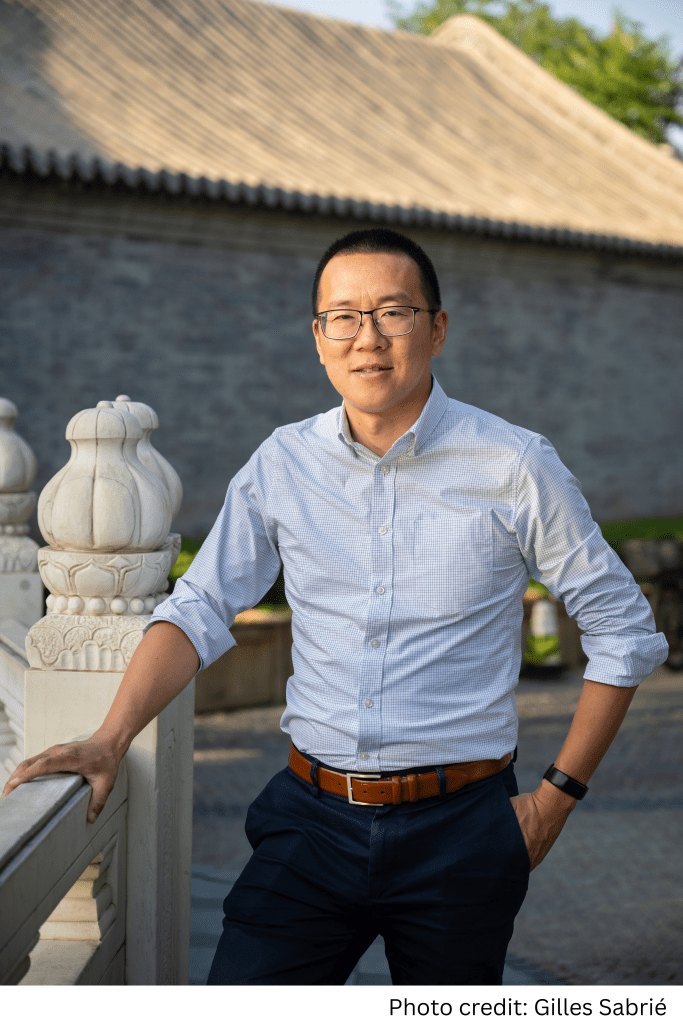
ABOUT THE AUTHOR
Jonathan Cheng is the China bureau chief for The Wall Street Journal, overseeing the coverage of the world’s second-largest economy across a range of areas including politics, economics, business, technology, and society. He oversees a team of more than two dozen correspondents and researchers in Beijing, Shanghai, Hong Kong, Taipei, Singapore, and New York with responsibility for the Chinese mainland and Taiwan.
Previously, Jonathan was the Seoul bureau chief for the Journal, running coverage of the Korean peninsula, including North Korea and South Korean politics and business. He began his career as an intern in the Journal’s Hong Kong bureau, and has also worked as a markets reporter in the New York office.
Jonathan speaks English, Cantonese and Mandarin Chinese, French, and Korean. A native of Toronto, Canada. He graduated from Princeton University with a degree in history. He lives in Beijing and has traveled to North Korea twice.
Jonathan can be reached at jonathan.cheng@wsj.com, LinkedIn, or Twitter.
Header Photo: North Koreans mourn before a statue of state founder Kim Il Sung in Pyongyang on July 11, 1994, three days after his death. The photo is from North Korea’s state-run Korean Central News Agency, via Associated Press.